Here, you'll find the most important guidelines for video & motion: movement, pacing and structure, framing and composition, color grading, sound, narrative tone, and contrasts.
Depending on the medium or the needs of the story, different styles of movement can be used to “dive deeper” or move on to the next topic.
A slow, steady zoom is used to visualize a continuous forward movement or to increase immersion. This is known as the “Ken Burns effect” and is used with still images.
A precise, energetic movement is created along the Z-axis to focus on the next piece of information.
This is a bold, fast movement along the Z-axis, covering a large distance to represent significant shifts or changes, such as a transition to a new topic or perspective.
Specific graphical elements are used
Keep cuts deliberate.
Edit with intention – build around clarity, not speed.
Structure around a clear visual and narrative arc (problem – insight – solution).
Ensure that framing feels observational – like in a documentary – and not commercial or theatrical.
Use natural perspectives and sight lines.
Prioritize clarity and context over drama.
Use natural or professional lighting setups that reflect real-world environments.
Apply the imagery guidelines: clean, clear, and grounded in reality.
Strive for a clear, precise appearance with natural contrast.
Apply enhanced color grading or cinematic effects only when they serve the story.
Use sound as an emotional undercurrent, not a distraction.
Maintain a confident, thoughtful, and informative tone.
Show impact through precision, not embellishment.
Remember: The viewer should feel that the video reflects their particular needs.
The use of contrasting elements is a powerful way of expressing the idea of micro and macro in storytelling.
Contrasts can be created not only on a visual level, but also along the spatial and temporal axes.
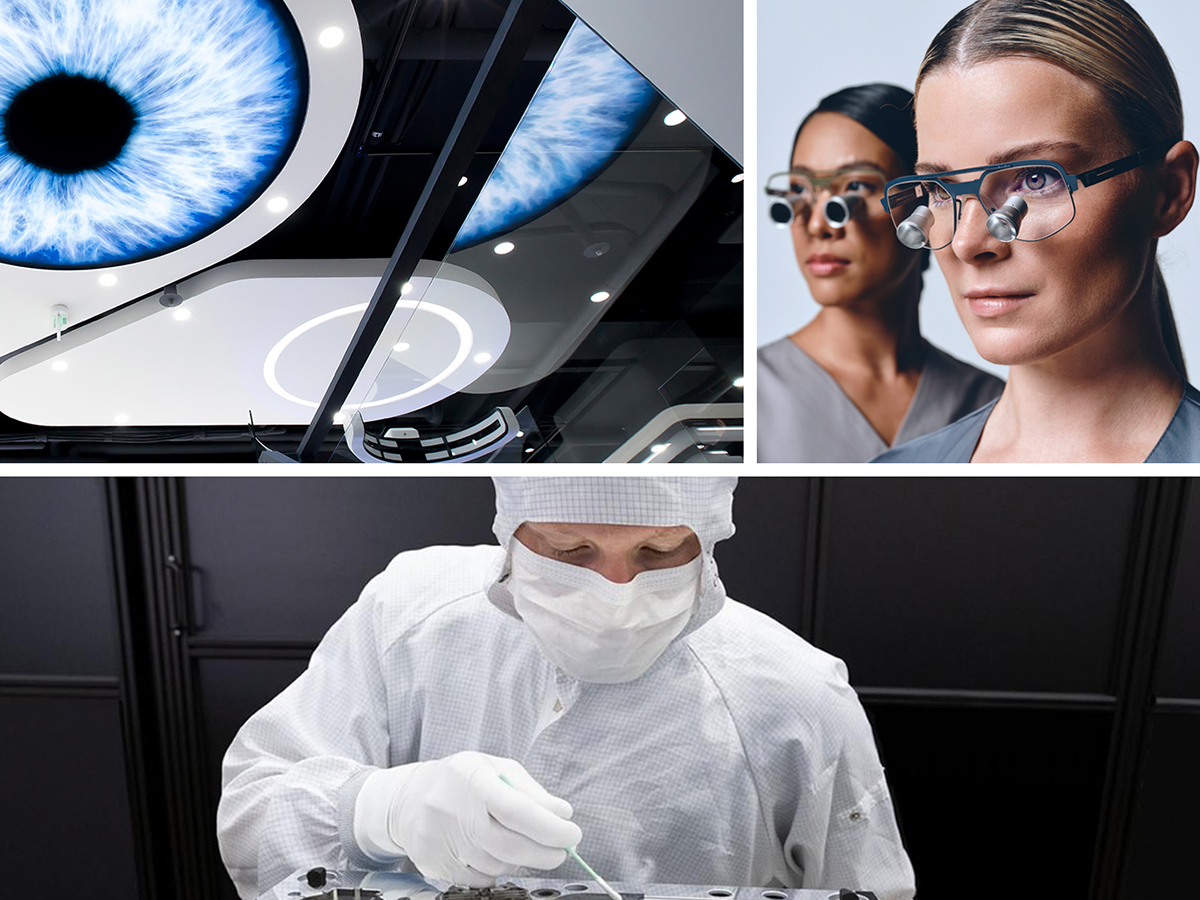
Use contrasts created through varying distances: light – dark, small – large, colorful – muted, detailed – broad.
Contrasts are emphasized by different levels of distance in the same context: far away, very close.
Both time-lapse shots and slow-motion shots make things visible that cannot be seen otherwise.
Different visual styles in one video
Unjustified extreme and dramatic points of view
Storytelling not aligned with brand voice
Deviations from ZEISS fonts and motion guidelines
Shaky, pixelated, or poorly lit video clips



Corporate Brand, Communications & Public Affairs